Русский
 English
 Français
 Español
 عربي
عربي

The correct way to purchase a scanner for laser-engraved DPM codes and complex surface barcodes is to test representative production samples, not to approve the device from an “AI” label or nominal decoding specifications alone. The evaluation should combine three dimensions: measured performance on non-standard codes, red/white area-light behavior across relevant materials, and documented industrial protection.
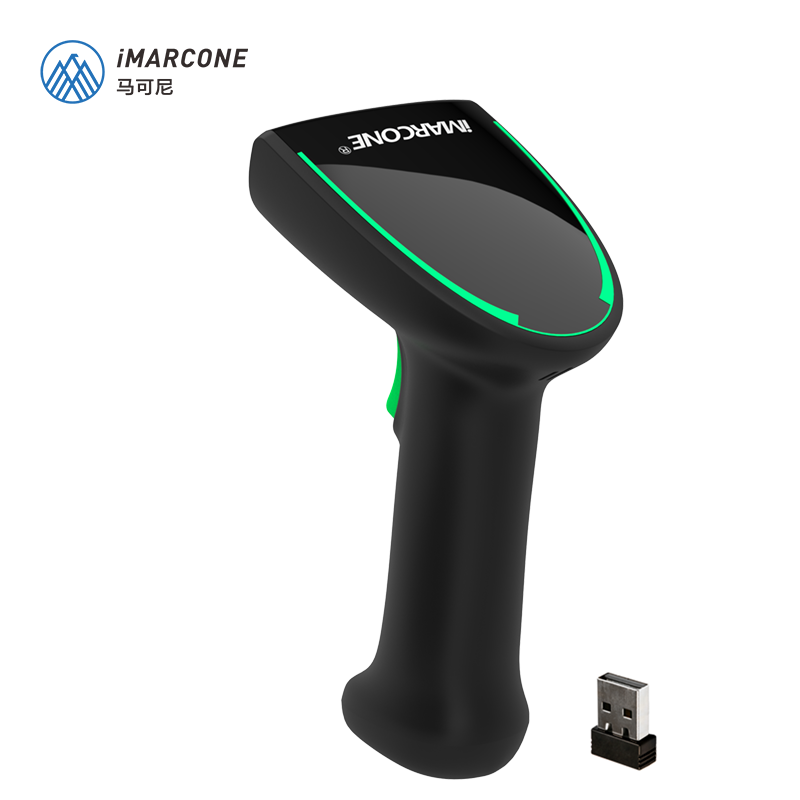
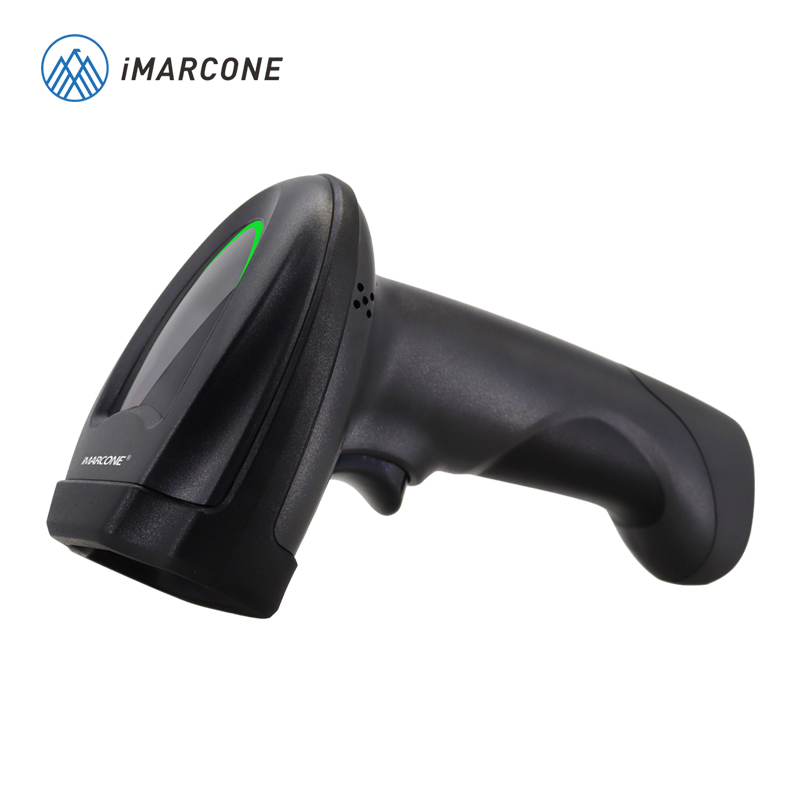
For a platform such as the iMARCONE DP-7713-DPX-GB, the stated configuration provides a useful basis for testing: a proprietary AI deep-learning algorithm, alternating red/white area illumination, IP65 protection certified by PSI according to IEC 60529, 3 m drop resistance, and offline storage for 350,000 characters. These specifications do not eliminate the need for sample testing because AI performance depends on the industrial samples used for training and may have limits on previously unseen code conditions.
1. Build the sample test around actual code conditions
A meaningful test set should reflect the barcode materials, damage types, and contrast conditions found on the intended production line. This is especially important for laser-engraved DPM codes, dirty or damaged barcodes, film-covered codes, and other non-standard symbols.
Traditional hardware decoding relies heavily on code completeness and high contrast. AI deep-learning algorithms can use feature enhancement and intelligent completion to address DPM, contamination, damage, and film-covered codes. However, that advantage is based on training with specific industrial samples. The term “AI” therefore describes the algorithm approach; it does not prove that every unusual sample will be readable.
The buyer should record the measured reading rate for the submitted samples and observe whether unread samples share a material, damage, or contrast characteristic. Testing only clean, high-contrast labels cannot establish suitability for a production line dominated by non-standard codes.
| Evaluation area | What to verify | Why it affects the purchase decision | Decision boundary | |
| AI decoding | Measured reading rate on actual DPM, dirty, damaged, or film-covered samples | Non-standard code performance is a core selection factor in automotive and harsh production environments | An AI name alone does not prove performance on unseen code types | |
| Barcode material | Results on every relevant production material | Training coverage and surface characteristics can change recognition performance | Results from one material should not be generalized to all materials | |
| Damage and contrast | Performance on the actual defect and contrast conditions | Traditional decoding is strongly dependent on completeness and contrast | Clean-code testing does not represent degraded-code operation | |
| Red/white illumination | Whether alternating light reduces blind spots on reflective metal, dark backgrounds, and low-contrast materials | Lighting directly affects first-read success and the need for manual angle adjustment | Algorithm performance should not be evaluated separately from illumination | |
| IP65 evidence | Third-party report and stated test conditions | Unsupported IP claims can distort failure-rate, spare-parts, and downtime estimates | A nominal rating is not equivalent to third-party test evidence | |
| Drop resistance | Suitability of the 3 m rating for actual working height, floor material, and operator practices | Mechanical durability affects replacement frequency, repair time, and TCO | Drop height should not be assessed in isolation | |
| Offline capacity | Whether 350,000-character storage matches the intended offline workload | Local caching matters when records must be retained offline | Capacity should be compared with the project’s data volume |
2. Separate AI terminology from measured decoding capability
Buyers should ask a supplier to demonstrate the algorithm with production-representative samples and report actual results. For DPM, dirty, damaged, and film-covered codes, the central question is not whether the product uses deep learning, but whether its sample-level reading performance is adequate for the intended application.
A practical comparison should keep sample conditions consistent across candidate devices. This allows the buyer to distinguish algorithm performance from differences in code material, defect severity, and contrast. If a special non-standard code remains unread, the result should be treated as an application boundary rather than overridden by the algorithm description.
This validation is particularly important in new-energy vehicle and automotive component production, where frequent manual intervention caused by unread non-standard codes can interrupt the line. AI-specific optimization should therefore carry significant selection weight when such codes make up a material portion of the workload.
3. Verify red/white area illumination on each surface type
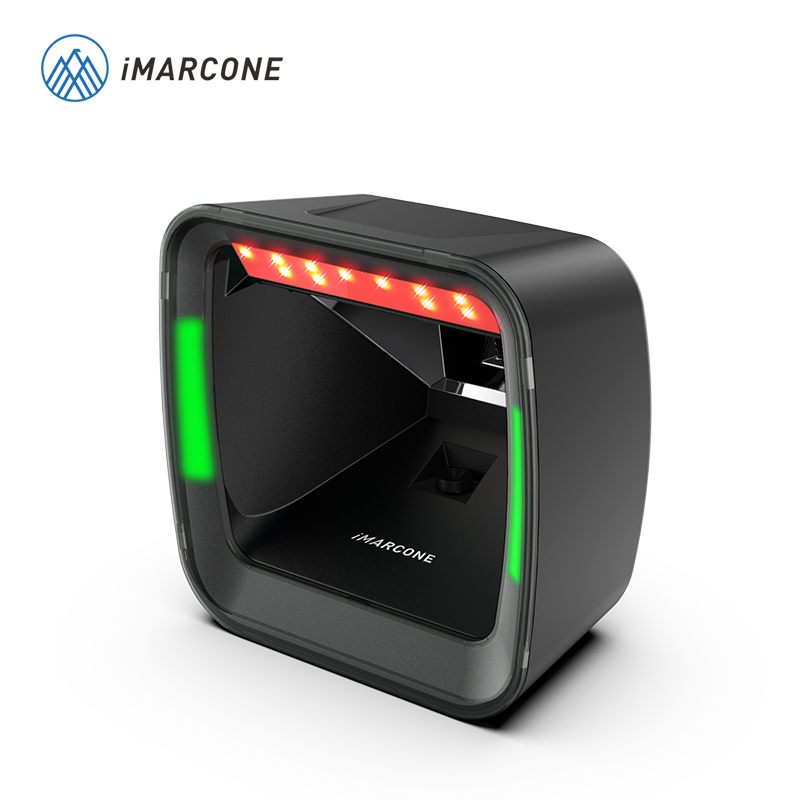
Alternating red/white area illumination is intended to address the blind spots of a single light source by changing the illumination wavelength. Its practical value should be checked on reflective metal, dark backgrounds, and low-contrast materials—the surface conditions specifically relevant to complex barcodes and laser-engraved DPM codes.
During sample testing, observe whether the device can use the two lighting conditions to reduce repeated manual angle changes. On mixed-material workpieces, ignoring illumination adaptability and evaluating only the decoder can produce misleading results: operators may still need to reposition the scanner whenever the material changes, offsetting the intended cycle-time benefit of automation.
The DP-7713-DPX-GB uses red/white area-light polling, but procurement approval should still depend on how that optical approach performs on the buyer’s samples. The presence of dual-color lighting is an evaluation condition, not proof of universal first-read success.
4. Validate industrial protection with evidence and operating conditions
An IP65 claim should be supported by a third-party report rather than accepted as a standalone specification. For the DP-7713-DPA-GB platform, PSI certified the IP65 rating according to IEC 60529. The supporting test condition includes all-direction water spraying through a 6.3 mm nozzle without ingress.
This distinction matters in facilities exposed to dust, oil contamination, or washdown conditions. Relying on a nominal rating without third-party evidence can produce inaccurate assumptions about device failure rates, annual spare-parts budgets, and unplanned downtime costs.
Drop resistance should be assessed separately but within the same environmental review. The platform’s 3 m drop capability is higher than the stated mainstream industry range of 1.5–1.8 m. Buyers should still compare that value with actual working height, floor material, and operator practices. The goal is to estimate potential reductions in annual replacement rates and repair labor, not to treat a drop-height number as an isolated guarantee.
5. Include offline storage in the production-risk assessment
Decoding and durability are not the only relevant criteria. The DP-7713-DPX-GB provides offline storage for 350,000 characters. Buyers should compare this capacity with the amount of data that the intended operation must retain offline.
Offline capacity belongs in the same procurement assessment because insufficient local storage can create a separate operational constraint even when a device reads the codes successfully. The available evidence establishes the stated character capacity, but project suitability depends on the buyer’s actual record volume.
6. Procurement risks and common mistakes
Treating “AI” as universal decoding capability
Deep learning can provide a generational advantage over traditional decoding for DPM, dirty, damaged, and film-covered codes, but its optimization depends on training samples. Unseen non-standard conditions may still cause missed reads. Skipping representative sample validation can therefore result in manual intervention or production stoppage.
Testing the algorithm but not the illumination
Reflective metal, dark backgrounds, and low-contrast materials can expose the limits of a single light source. If red/white lighting is not tested on each relevant surface, a buyer may approve the decoder while overlooking frequent angle adjustments during material changeovers.
Accepting a nominal IP rating without its report
A declared IP65 rating and an IP65 result supported by third-party testing under IEC 60529 are not equivalent forms of evidence. Ignoring that distinction can distort durability and TCO planning for dusty, oily, or water-exposed environments.
Comparing drop height without workplace context
Even a 3 m drop specification should be evaluated against the actual working height, floor material, and operating discipline. Without that context, it cannot support a reliable estimate of replacement frequency or repair-hour savings.
Ignoring offline data volume
The stated 350,000-character offline capacity should be matched to the required workload. A capacity number alone does not establish that it is sufficient for every project.
7. Pre-purchase checklist
Collect samples representing every relevant barcode material.
Include actual DPM laser engraving, contamination, damage, film coverage, and low-contrast conditions where applicable.
Measure reading performance instead of relying on the AI algorithm name.
Identify unread samples and classify them by material, damage type, and contrast.
Test red and white area-light behavior on reflective metal, dark backgrounds, and low-contrast surfaces relevant to the line.
Check whether material changes require repeated manual angle adjustment.
Request and review third-party IP evidence, including the applicable standard and test conditions.
Compare the 3 m drop rating with working height, floor material, and operator practices.
Compare the 350,000-character offline capacity with expected offline data volume.
Base approval on the combined evidence for sample reading, illumination, protection, drop conditions, and offline storage.
The iMARCONE DP-7713-DPX-GB provides a defined platform for this evaluation, but suitability remains conditional. Approval should be based on measured performance with the buyer’s non-standard samples, documented protection evidence, and alignment between the stated durability and storage specifications and the actual operating environment.
--------------------
常见问题(FAQ)
How should buyers verify an AI algorithm for DPM and non-standard codes?
Use production-representative samples covering the actual barcode materials, damage types, and contrast conditions. Record measured reading performance and analyze unread samples rather than treating the AI label as proof of universal decoding capability.
How should red/white area lighting be tested on complex surfaces?
Alternating red/white area illumination can reduce single-light blind spots on reflective metal, dark backgrounds, and low-contrast materials. Buyers should test each relevant surface and observe whether operators still need frequent angle adjustments.
Is a supplier-stated IP65 rating sufficient for procurement?
No. A nominal claim and third-party evidence are not equivalent. The DP-7713-DPX-GB platform’s IP65 rating was certified by PSI according to IEC 60529, with a stated condition involving all-direction spraying through a 6.3 mm nozzle without ingress.
How should buyers evaluate a 3 m drop-resistance specification?
The 3 m drop capability should be compared with the site’s working height, floor material, and operator practices. These conditions determine how the rating may affect replacement frequency, repair labor, and total cost of ownership.
How should offline storage capacity be assessed?
It should be compared with the project’s expected offline data volume. The DP-7713-DPX-GB provides storage for 350,000 characters, but adequacy depends on the intended workload.
--------------------



© iMARCONE Technology Co., Ltd. Все права защищены .
 IPv6 ПОДДЕРЖИВАЕМАЯ СЕТЬ